A glass flask of volume one liter at 0°C is filled, level full of mercury at this temperature. The flask and mercury are now heated to 100°C. How much mercury will spill out, if coefficient of volume expansion of mercury is  and linear expansion of glass is
  respectively
Text Solution
Verified by ExpertsThe correct answer is:
B
Due to volume expansion of both liquid and vessel, the change in volume of liquid relative to
container is given by Δ Δ V = 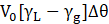
Given V 0 = 1000 cc, α α g = 0.1×10 –4 /°C

∴ ∴ Δ Δ V = 1000 [1.82 × 10 –4 – 0.3 × 10 –4 ] × 100 =15.2 cc
Prepare Smarter with CGP Edu
Get practice questions, solutions, and test series in one place.
Write a Review
Share your experience with this question and solution.
Commentary
Send your comment, doubt, correction, or feedback to admin.
Similar Questions
Explore conceptually related problems
A glass flask is filled up to a mark with 50 cc of mercury at 18ºC. If the flask and contents are h…
Solids expand on heating because
An iron tyre is to be fitted on to a wooden wheel 1m in diameter. The diameter of tyre is 6 mm smal…
A steel scale measures the length of a copper wire as when both are at (the calibration temperatu…
Two metal strips that constitute a thermostat must necessarily differ in their
A metal ball immersed in alcohol weighs at 0°C and at 59°C. The coefficient of cubical expansion …